
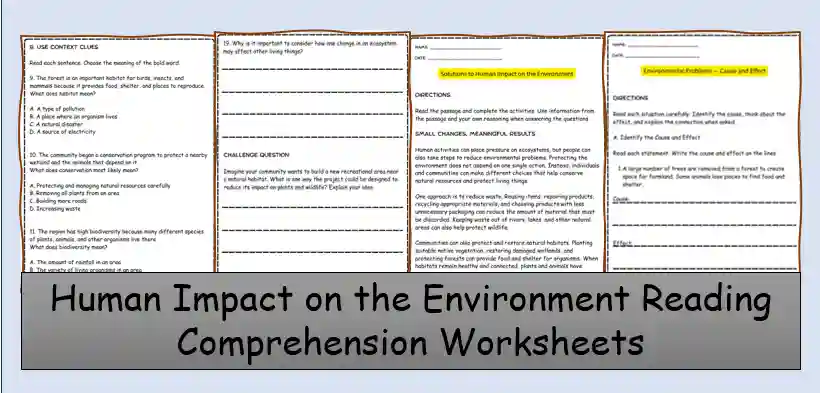
People interact with the environment every day, often without realizing how much their choices can change the world around them. The way we use water, energy, land, forests, and other natural resources can affect air quality, soil, ecosystems, and wildlife. Some human activities can cause environmental problems, while others can help protect and restore nature.
This Human Impact on the Environment Reading Comprehension Worksheet gives students an opportunity to explore these connections through an engaging informational passage. As they read, they will learn about human activities and the environment while practicing important reading skills such as identifying the main idea, finding supporting details, understanding cause-and-effect relationships, and using environmental vocabulary in context. The activities also encourage students to think about practical ways people can reduce environmental harm and make more responsible choices.
What Is Human Impact on the Environment?
Human impact on the environment refers to the ways people change the natural world through their daily activities, choices, and use of resources. People depend on the environment for many things, including clean water, food, energy, materials, and places to live. Because humans rely on natural resources, the way these resources are used can influence the health of the environment.
Human activities can change ecosystems, which are communities where plants, animals, microorganisms, and their surroundings interact. Building roads and cities, clearing forests, producing waste, farming, using energy, and extracting natural resources can alter habitats and affect the balance of an ecosystem. For example, removing a large area of forest may reduce the space and food available to wildlife.
Not every human impact is harmful. People can also make choices that support the environment. Planting native trees, restoring damaged habitats, protecting wildlife, reducing waste, conserving water, and using resources responsibly can help ecosystems remain healthy.
Environmental changes can affect plants, animals, and people because living things depend on one another and on their surroundings. A change in water quality, temperature, food supply, or habitat can create effects that spread through an ecosystem. Understanding these connections helps us recognize environmental problems and consider practical ways to protect the natural world.
What Will Students Learn From Human Impact on the Environment Worksheets
- Reading informational text
- Identifying the main idea
- Finding supporting details
- Understanding cause and effect
- Using context clues
- Learning environmental vocabulary
- Making inferences
- Citing information from a passage
- Connecting human actions with environmental changes
- Developing critical-thinking skills
How to Use This Environmental Reading Comprehension Worksheet
Keep this practical.
In the Classroom
Use it as:
- science reading practice
- ELA integration
- independent classwork
- environmental science review
- early-finisher work
At Home
Parents can use it for:
- reading practice
- science enrichment
- homework
- independent learning
Homeschool
It can work as an informational reading activity combined with an environmental science lesson.
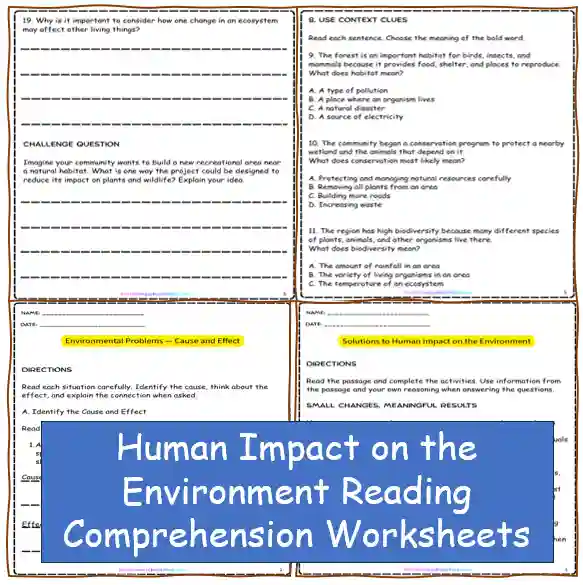
Get Your Human Impact on the Environment Worksheet Here!
Ready to help students explore how human activities affect the natural world? You can download and print the Human Impact on the Environment Reading Comprehension Worksheet from here and use it for classroom practice, science lessons, homework, independent learning, or at-home study.
The worksheet includes an engaging informational reading passage along with comprehension questions, vocabulary practice, cause-and-effect thinking, and short-answer questions. Simply download the printable worksheet, print it, and let students begin learning about environmental changes and the ways people can help protect our planet.
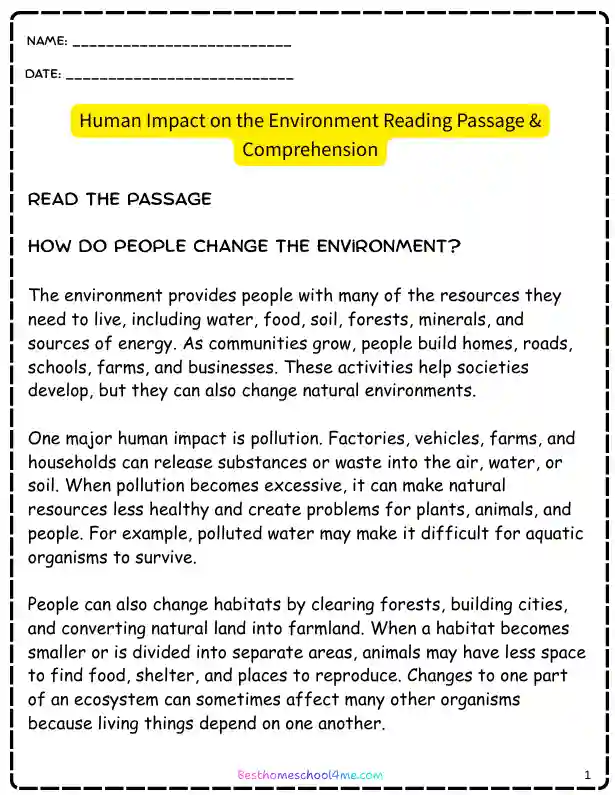
Human Impact on the Environment Reading Passage & Comprehension
An informational reading passage explaining how human activities affect natural resources, ecosystems, wildlife, air, water, and land. Students answer comprehension questions based directly on the passage, including main idea, supporting details, inference, and cause-and-effect.
Human Activities and Their Effects on Ecosystems
Students explore common human activities such as deforestation, pollution, urban development, agriculture, and resource use. They identify how each activity can affect habitats, plants, animals, and ecosystem balance.
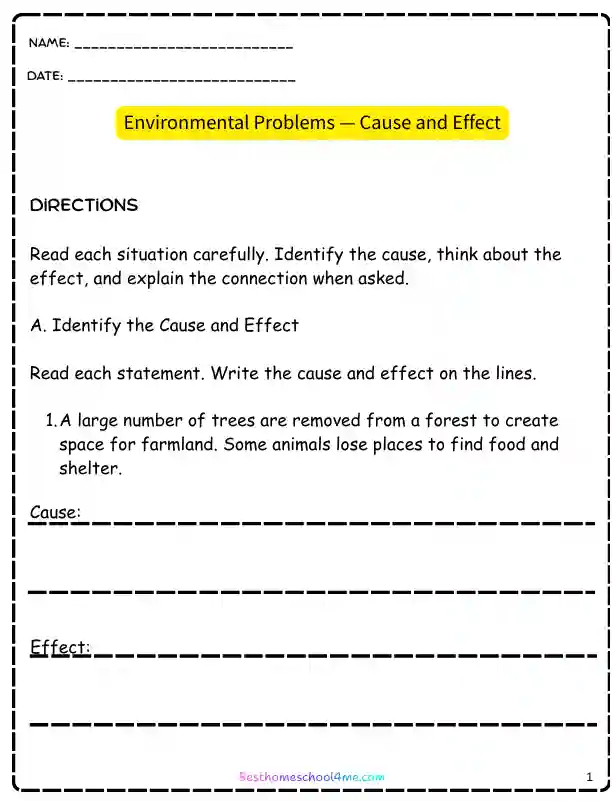
Environmental Problems — Cause and Effect
A cause-and-effect focused worksheet covering pollution, habitat loss, deforestation, waste, and excessive resource use. Students connect human actions with environmental consequences and explain relationships using evidence.
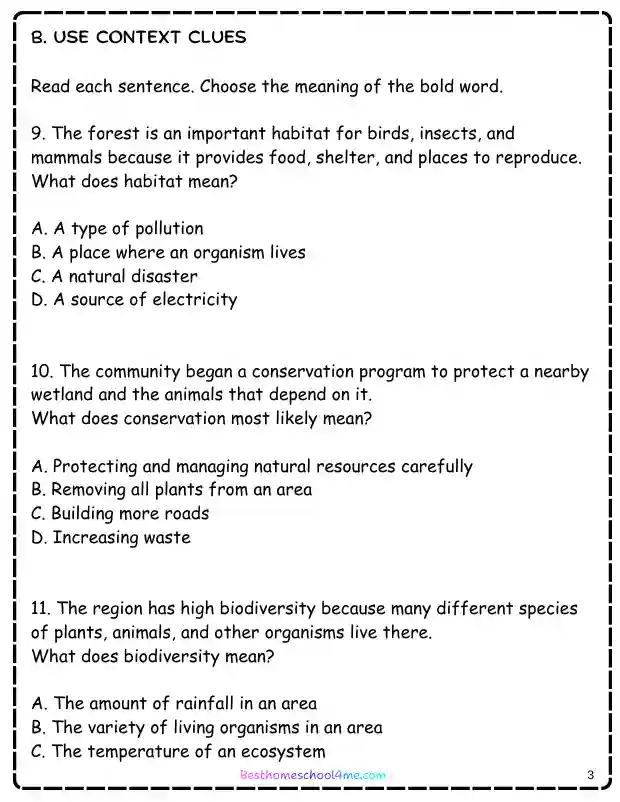
Environmental Vocabulary & Context Clues
Students learn important environmental terms through definitions, context clues, matching, and sentence-based questions. Vocabulary can include ecosystem, habitat, conservation, biodiversity, natural resources, pollution, deforestation, sustainability, and renewable resources.
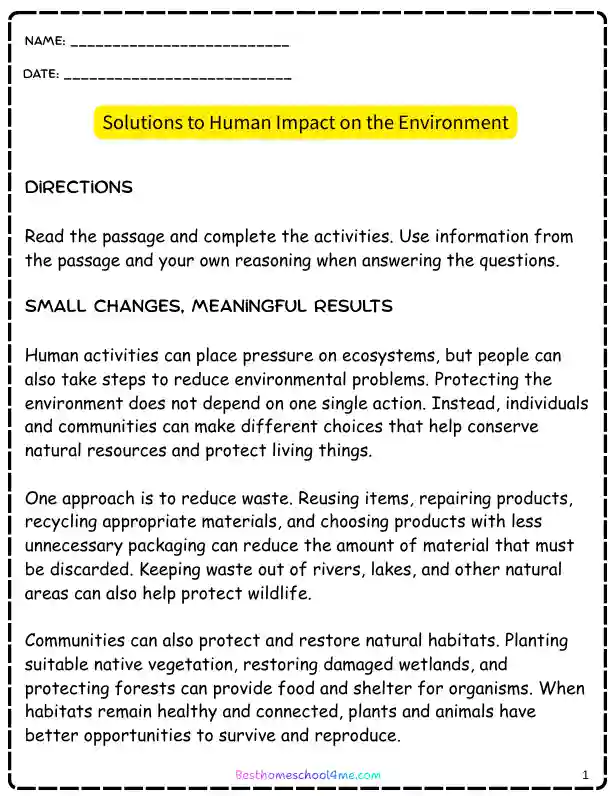
Solutions to Human Impact — Think, Read & Respond
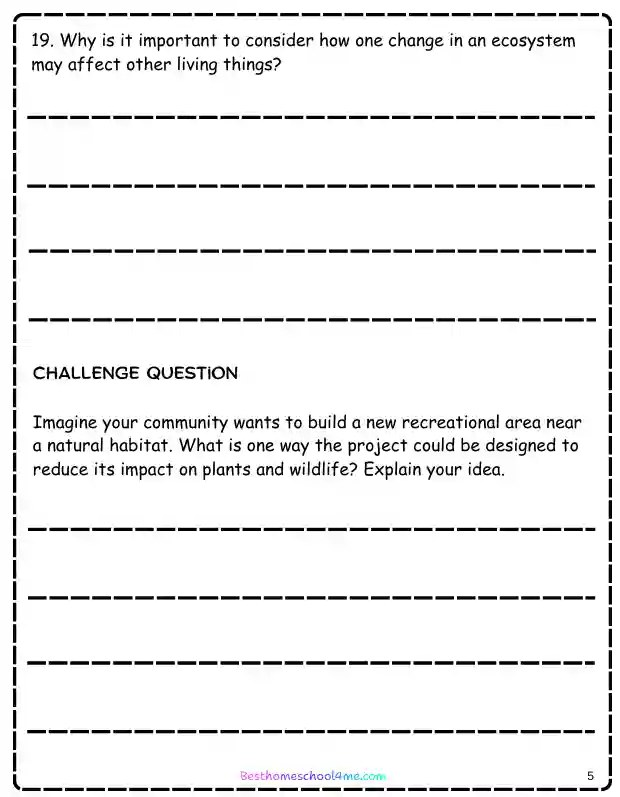
Students read a short informational section about conservation, habitat restoration, reducing waste, renewable energy, protecting natural resources, and responsible resource use. They then answer questions and complete short written responses about possible environmental solutions.
Want all five worksheets in one convenient PDF? Get the complete bundle, with all five worksheets combined into a single PDF for easy downloading, printing, and use. Perfect for classroom learning, homework, and homeschool activities.
Skills Practiced With the Human Impact on the Environment Worksheet
Reading Skills
- Informational text comprehension
- Main idea
- Supporting details
- Inference
- Context clues
- Text evidence
Science Skills
- Human-environment interaction
- Ecosystem changes
- Environmental problems
- Natural resource use
- Conservation
- Sustainability
Explore More Worksheets-
- Descriptive and Limiting Adjectives Worksheets
- Snow Leopard Worksheets: Facts, Habitats & Adaptations
- Canadian Government Worksheets
- Analogy Worksheets
- Allusion Worksheets
- Double Entendre Worksheets
- Florida Worksheets
- Cursive Writing Paragraph Practice Worksheets
Frequently Asked Questions About Human Impact on the Environment Reading Comprehension Worksheets
How can teachers use a human impact on the environment worksheet in a lesson?
Teachers can use this worksheet as an environmental science reading activity, independent practice, homework assignment, or ELA and science integration lesson. The activities help students connect an informational text with topics such as pollution, habitat changes, natural resources, conservation, and sustainable choices while strengthening reading comprehension and critical-thinking skills.
What are some ways people can reduce their impact on the environment?
People can reduce environmental impacts by using natural resources responsibly, reducing unnecessary waste, conserving water and energy, protecting habitats, restoring damaged ecosystems, and making thoughtful choices about how land and resources are used. Small actions combined with community efforts can contribute to healthier ecosystems.
What can students learn from a human impact on the environment reading comprehension worksheet?
Students can learn how human activities influence ecosystems while practicing important reading skills. These may include identifying the main idea, locating supporting details, understanding cause-and-effect relationships, using environmental vocabulary in context, making inferences, and explaining answers with information from a passage.