
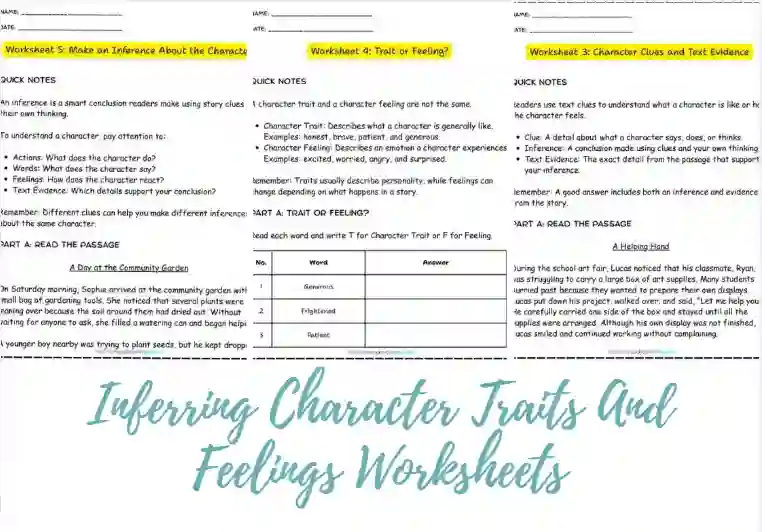
Understanding a character is an important part of becoming a thoughtful reader. In Grade 5, students can learn to infer what a character is like and how that character feels by paying attention to clues in a story. Actions, dialogue, thoughts, reactions, and situations can all provide useful evidence. These Inferring Character Traits and Feelings Worksheets for Grade 5 give students structured practice in noticing those clues and using them to make reasonable conclusions. Instead of simply locating an answer stated in the passage, students learn to infer character traits from text, identify emotions, and support their ideas with text evidence. These character traits worksheets for grade 5 and inferring character feelings worksheets can also strengthen reading comprehension, critical thinking, and making inferences in reading. The activities are suitable for classroom practice, homework, tutoring, homeschool learning, and independent reading work.
What Does It Mean to Infer Character Traits and Feelings?
When readers infer character traits and feelings, they look closely at what a character does, says, thinks, and how the character reacts to events. The author may not directly tell readers everything about the character, so readers use clues from the text to figure it out.
- Character Trait: A quality or characteristic that describes what a character is like, such as kind, honest, brave, patient, or helpful.
- Character Feeling: An emotion a character experiences, such as happiness, fear, excitement, disappointment, or worry.
- Inference: A conclusion readers make by combining clues from the text with their own thinking and understanding.
Simple Example
Maya noticed a new student sitting alone. She invited him to join her group and shared her supplies.
Inference: Maya is kind and helpful.
Text Evidence: Maya invited the new student to join her group and shared her supplies. These actions give readers clues about her character.
Remember: A strong inference should always be supported by evidence from the text. This helps students move beyond simply guessing and learn how to infer character traits from text accurately.
How to Infer Character Traits and Feelings
Students can use a simple “Clue → Think → Infer” strategy to understand characters more deeply. Instead of guessing, readers look for specific details in the story, think about what those details reveal, and then make a reasonable inference.
Look at the Character’s Actions
Ask: What does the character do?
A character’s actions can reveal important traits and feelings. For example, if a character helps someone who is struggling, the reader might infer that the character is kind or helpful.
Pay Attention to Dialogue
Ask: What does the character say, and how does the character speak?
Words, tone, and the way a character responds can provide clues. A character who calmly encourages a friend may seem supportive, while someone who speaks angrily may be frustrated or upset.
Notice Thoughts and Reactions
Ask: What is the character thinking? How does the character react?
Thoughts and reactions can reveal emotions that may not be directly stated. If a character’s hands shake before giving a speech, readers might infer that the character feels nervous.
Examine the Situation
Ask: What is happening around the character?
The situation can help readers understand why a character behaves or feels a certain way. Consider what happened before, what is happening now, and how the character responds to the situation.
Find Text Evidence
Ask: Which details prove your inference?
A good inference should be supported by evidence from the story. Students should identify the specific action, dialogue, thought, or reaction that helped them reach their conclusion.
Why Practice Character Inferences?
- strengthen reading comprehension
- identify important story clues
- understand characters more deeply
- support answers with text evidence
- develop critical-thinking skills
Get Your Inferring Character Traits and Feelings Worksheets for Grade 5
Help students strengthen reading comprehension and inference skills with these engaging character traits and feelings worksheets. Each activity gives students short passages, character clues, and situations that encourage them to think beyond information directly stated in the text.
Students will practice identifying character traits, recognizing feelings, using text evidence, and explaining how they reached their conclusions. These worksheets can be used for classroom practice, homework, literacy centers, tutoring, or independent reading activities.
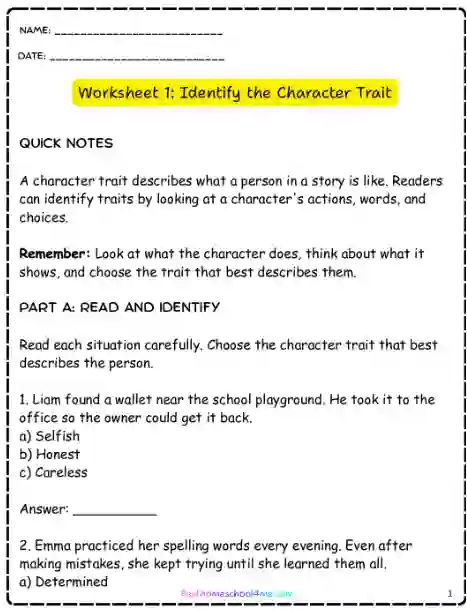
Identify the Character Trait
Students read short character-based situations and determine the trait demonstrated through the character’s actions or choices.
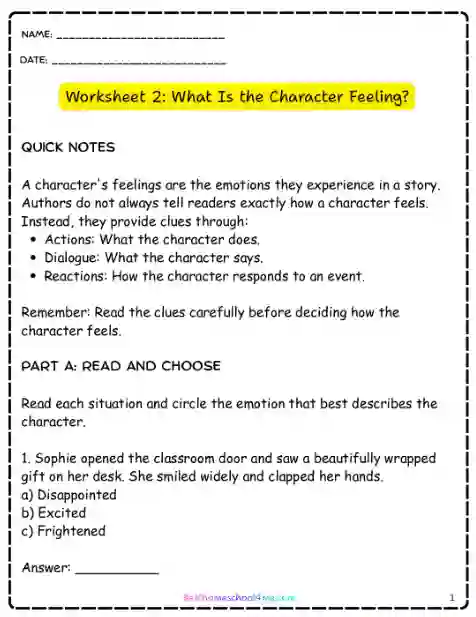
What Is the Character Feeling?
Students read short passages and use actions, dialogue, and reactions to infer the character’s emotion.
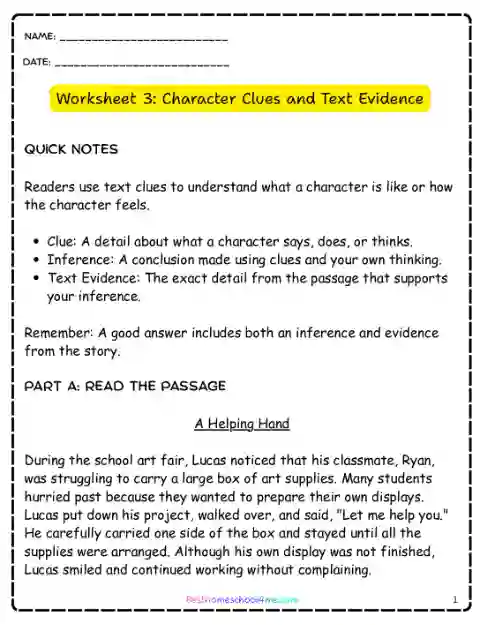
Character Clues and Text Evidence
Students identify clues in a passage and use those clues to infer a character trait or feeling. This worksheet emphasizes supporting answers with evidence.
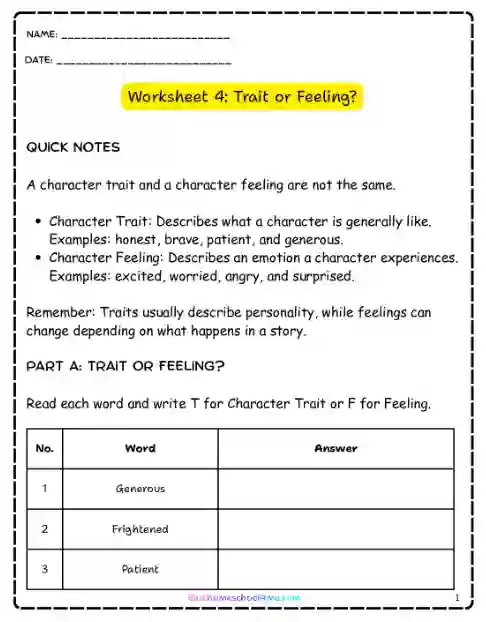
Trait or Feeling?
Students distinguish between character traits and temporary feelings, then use context clues to classify each example correctly.
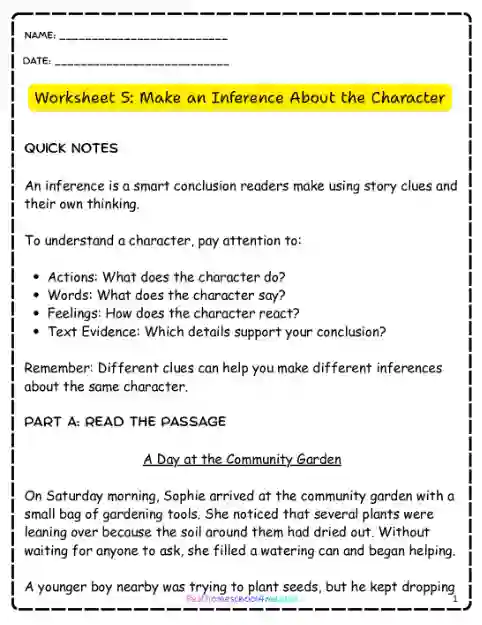
Make an Inference About the Character
Students read a slightly longer passage and make multiple inferences about the character’s personality and emotions, supporting each answer with details from the text.
Character Traits Word Bank for Grade 5
This character traits and feelings word bank gives Grade 5 students useful vocabulary they can refer to while completing the worksheets. Encourage students to choose words that best match the clues and evidence found in the text rather than selecting a word simply because it sounds appropriate.
Positive Character Traits
| Trait | Simple Meaning |
|---|---|
| Kind | Caring about others and treating them well |
| Honest | Telling the truth |
| Brave | Willing to face something difficult or scary |
| Patient | Able to wait calmly |
| Responsible | Doing what you are expected to do |
| Helpful | Willing to assist others |
| Thoughtful | Showing care and consideration |
| Confident | Believing in yourself and your abilities |
| Curious | Wanting to learn or discover something |
| Generous | Willing to give or share with others |
Other Useful Character Traits
| Trait | Simple Meaning |
|---|---|
| Shy | Quiet or uncomfortable around others |
| Stubborn | Unwilling to change your mind |
| Careless | Not paying enough attention |
| Selfish | Thinking mainly about yourself |
| Impatient | Having difficulty waiting |
| Determined | Continuing to work toward a goal |
| Nervous | Uneasy or worried about something |
| Creative | Able to think of new ideas |
| Respectful | Showing consideration for others |
| Independent | Able to do things without much help |
Feelings and Emotions
| Feeling | Simple Meaning |
|---|---|
| Happy | Feeling pleasure or joy |
| Excited | Feeling enthusiastic about something |
| Worried | Feeling concerned about something |
| Nervous | Feeling uneasy or unsure |
| Disappointed | Feeling sad because something did not happen as hoped |
| Angry | Feeling strong displeasure |
| Proud | Feeling pleased about something you or someone else achieved |
| Embarrassed | Feeling uncomfortable or self-conscious |
| Surprised | Feeling shocked by something unexpected |
| Frightened | Feeling afraid |
| Lonely | Feeling sad because you want companionship |
| Relieved | Feeling better after a worry or difficulty has ended |
Explore More Worksheets-
- Practice cursive writing step by step with free printable worksheets
- Free Printable Double Entendre Worksheets
- Cursive writing practice sheets from full paragraphs
- Cost Price and Selling Price Worksheets
- Canadian Government Worksheets
- Descriptive and Limiting Adjectives Worksheets
- Kawaii Axolotl Coloring Pages
- Halloween Axolotl Coloring Pages
- Analogy Worksheets
- Explore Printable Personal Goal Development Worksheets
Frequently Asked Questions About Inferring Character Traits And Feelings Worksheets
How do you teach Grade 5 students to infer character traits?
Teach students to look for clues in a character’s actions, dialogue, thoughts, reactions, and choices. Ask them what each clue suggests about the character and have them support their answer with evidence from the text. A simple “Clue → Think → Infer → Prove” strategy can help students practice making character inferences systematically.
What are character traits and feelings in reading?
Character traits describe what a character is generally like, such as kind, brave, honest, patient, or determined. Character feelings describe emotions a character experiences, such as happiness, fear, anger, excitement, or disappointment. Understanding both helps students develop stronger reading comprehension and character analysis skills.
How can students identify character feelings from text?
Students can identify character feelings by examining what the character does, says, thinks, and how they react to events. For example, if a character’s hands shake before speaking in front of a crowd, readers may infer that the character is nervous. Students should use specific text evidence to explain how they reached their conclusion.